There are two
main types of mesothelioma: Pleural and Peritoneal. There is another rare type of mesothelioma known as Pericardial.
Pleural Mesothelioma
"Pleural mesothelioma is a cancer of the protective lining of the lung, known as the pleura. It is caused by inhaling asbestos fibers into the lungs. It is the most common form of mesothelioma."
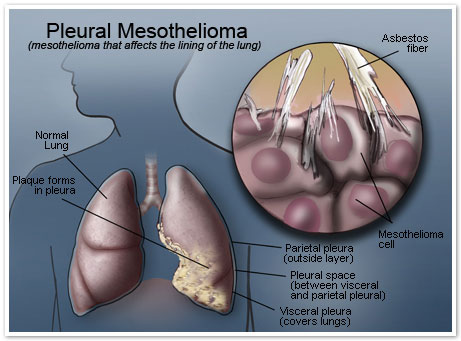
This is a type of cancer that starts in the membrane that covers the lungs. Although it develops in the chest and involves the lining of the lungs, it is not a lung cancer and it is treated differently to lung cancer. Pleural mesothelioma makes up
roughly 75 percent of all mesothelioma diagnoses. The average life expectancy of a person with
pleural mesothelioma is between 12 and 21 months depending on how advanced the
disease is and the treatments they receive.
Peritoneal Mesothelioma
"Peritoneal mesothelioma is a form of cancer that affects the lining of the abdomen (the peritoneum). It is caused by the ingestion of asbestos fibers."
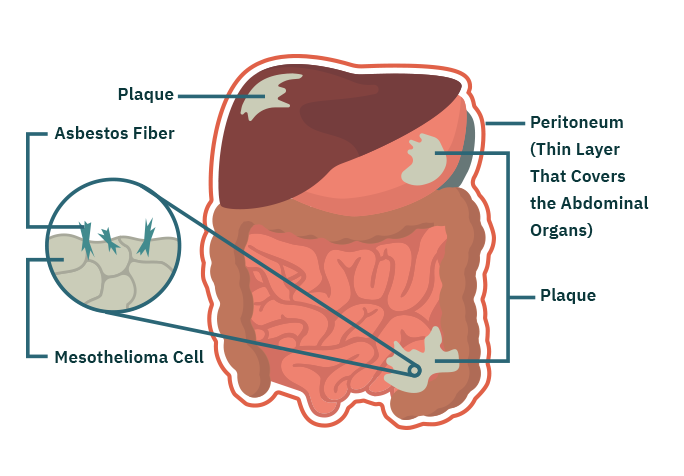
Peritoneal mesothelioma
accounts for 20 to 25 percent of all mesothelioma cases. It is the most common diagnosis after pleural
mesothelioma. Peritoneal patients have longer life expectancies than those with
other types of mesothelioma. Some studies report patients living upwards of 5
years after cytoreductive surgery.
Pericardial Mesothelioma
"Pericardial mesothelioma affects the lining surrounding the heart (pericardium). It is a rare form of mesothelioma and only accounts for 1 percent of all diagnoses."
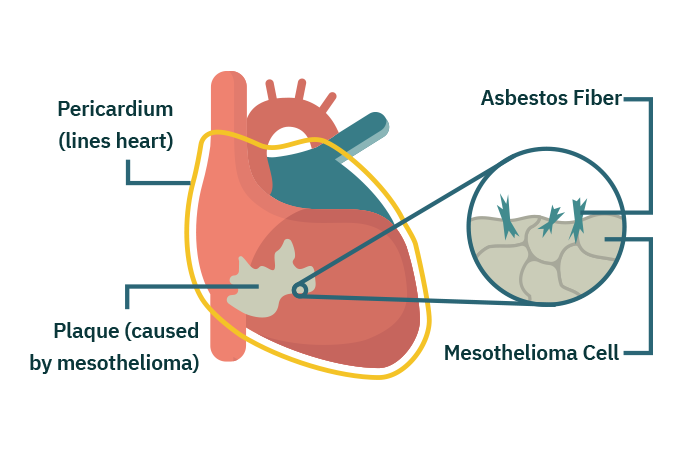
Pericardial mesothelioma is a
cancer that affects the pericardium. It is currently unknown how the asbestos
fibers get into the pericardium, and this type of mesothelioma is extremely
hard to detect. Men are two times more likely to be diagnosed with pericardial
mesothelioma than women. There have been cases of pericardial mesothelioma
metastasizing to the lung or abdomen.